5G Health Concerns Australia
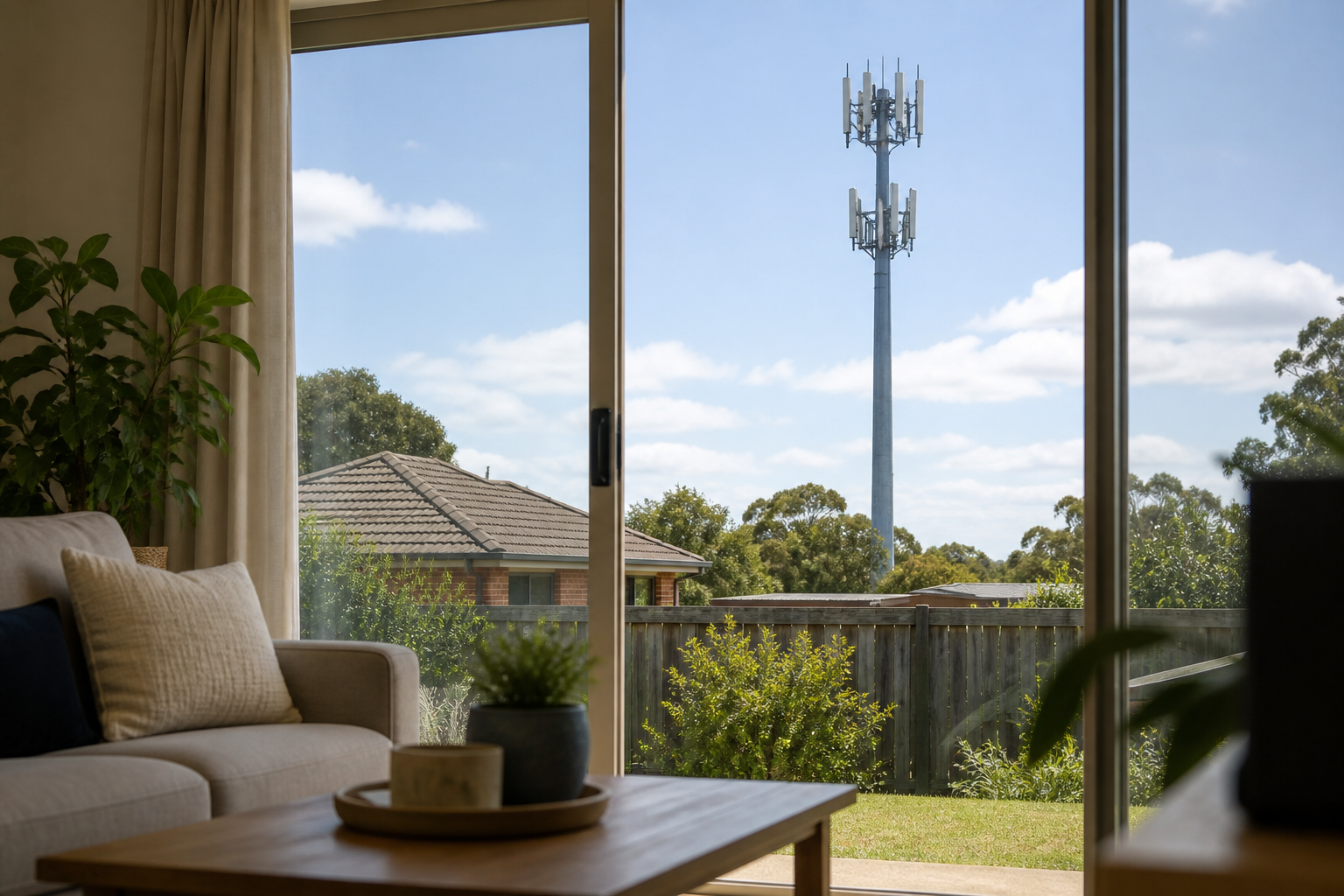
Australian health authorities say 5G radiofrequency exposure below national limits has not been shown to cause adverse health effects. However, that does not make every personal concern meaningless. Australians can take proportionate steps to reduce cumulative daily exposure, track symptoms carefully, and seek medical advice rather than relying on fear or absolute safety claims.
As at 2026, Australia continues to expand its use of 5G across mobile networks, homes and workplaces. Public debate has not kept pace with the complexity of the issue. Official guidance focuses on compliance with exposure limits, while concerned Australians often want to understand their total environment and day-to-day symptoms.
This guide explains what 5G is, what Australian authorities say, where uncertainty remains, and how to make practical decisions without panic. For wider context, see our EMF health concerns hub.
Key takeaways
The central issue is not whether radiofrequency exposure exists. It clearly does. The useful questions are whether exposure complies with Australian limits, how much avoidable exposure occurs in your immediate environment, whether symptoms need medical investigation, and which practical controls suit your circumstances.
- 5G uses non-ionising radiofrequency energy, which does not carry enough energy to ionise atoms like X-rays can.
- ARPANSA says there is no substantiated evidence that 5G exposure below Australian limits causes adverse health effects.
- Compliance with a limit does not require you to keep every wireless device beside your body all day and night.
- Distance, duration, signal strength and the number of nearby sources all affect your personal exposure pattern.
- EMF neutralisation offers a layered approach that complements distance and wired connections — apply discs to phones, laptops and routers from our EMF protection devices collection, and add Whole House USB where ambient exposure matters.
- Aulterra products are not medical treatments and do not replace appropriate healthcare; documented research and customer experience support their use as part of a broader exposure plan.
- Symptoms such as headaches, fatigue or poor sleep are real, but they are not specific proof of an EMF-related cause.
- Sensible exposure reduction can coexist with medical care and evidence-based safety guidance.
Protect your family from EMF exposure
Browse our science-backed neutralizer products.
Shop EMF ProtectionSummary table
A useful 5G risk assessment separates established facts from precautionary choices and unsupported conclusions. This prevents two common errors: claiming that every symptom comes from 5G, or assuming that regulatory compliance means exposure patterns are irrelevant to an individual's comfort and wellbeing.
- Evidence-based position
- No. It uses non-ionising radiofrequency energy.
- Practical response
- Do not compare it directly with X-rays or nuclear radiation.
- Evidence-based position
- Yes. Australian limits are administered through the national regulatory framework.
- Evidence-based position
- Australian health authorities and Cancer Council Australia say current evidence does not establish this.
- Practical response
- Treat absolute cancer claims cautiously.
- Evidence-based position
- Yes. Precautionary reduction does not require rejecting official guidance.
- Practical response
- Increase distance, reduce unnecessary connection time, use speakerphone and wired options where practical.
- Evidence-based position
- No. Headaches, fatigue and poor concentration have many possible causes.
- Practical response
- Record patterns and consult a qualified health professional.
- Evidence-based position
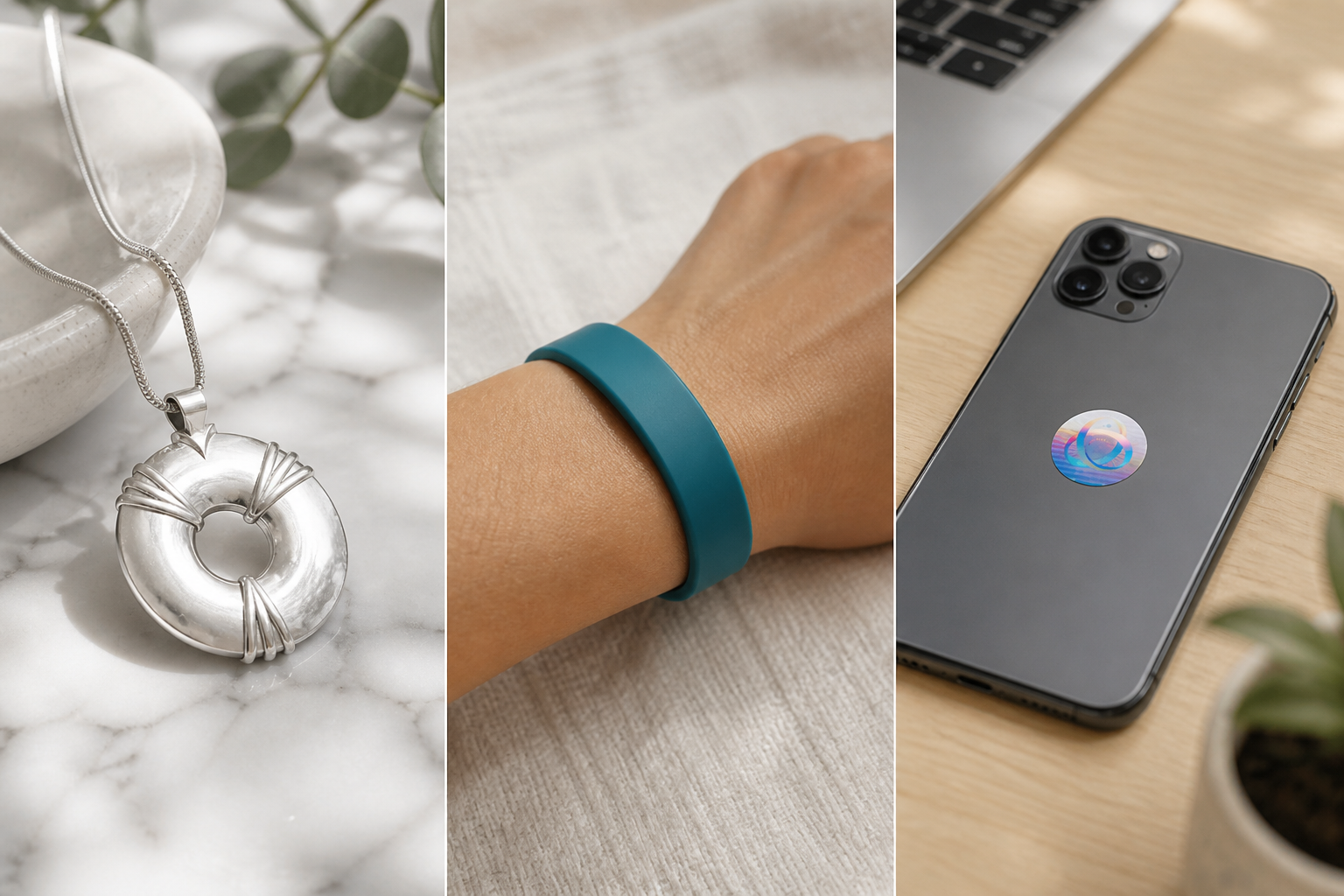
- Device discs, pendants, wristbands and whole-home products. Aulterra neutralisation retunes fields at the source; documented research and customer experience support layered use.
- Practical response
- Apply discs to high-use devices, add wearables or whole-home coverage as needed, and keep source reduction in the plan
What does the evidence say about 5G and health?
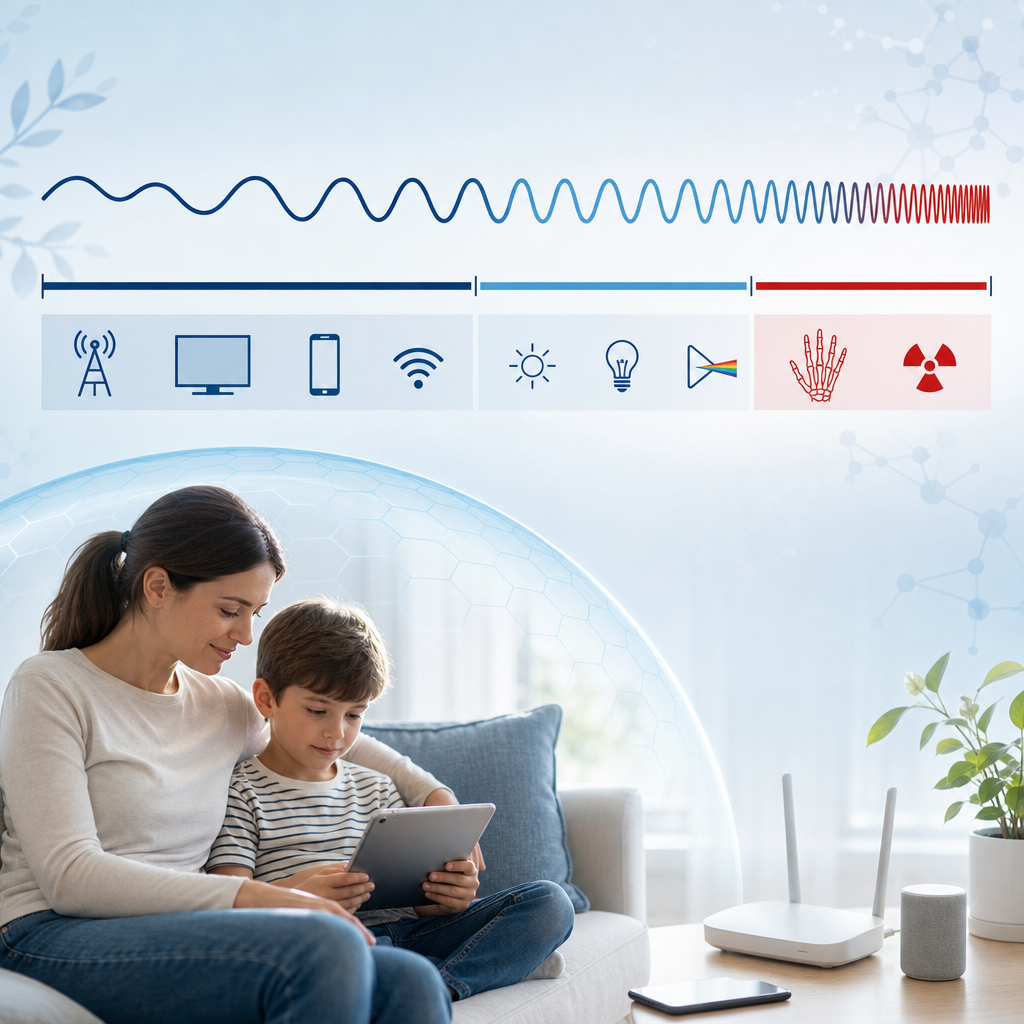
The established Australian position is that 5G exposure below the applicable public limits has not been shown to cause adverse health effects. ARPANSA bases this position on the wider radiofrequency evidence, recognised biological effects and exposure standards designed to prevent established harm, particularly excessive tissue heating.
5G sits within the radiofrequency portion of the electromagnetic spectrum. It is non-ionising radiation. Unlike ionising radiation, it does not have enough energy per photon to remove electrons from atoms or directly damage DNA through ionisation.
That distinction matters, but it should not be turned into the claim that non-ionising radiation can never interact with the body. Radiofrequency energy can be absorbed, and sufficiently high exposure can heat tissue. This established effect is central to radiofrequency exposure limits.
According to ARPANSA, there is no substantiated evidence that exposure to radiofrequency electromagnetic energy from 5G at levels below the safety limits causes adverse health effects. The World Health Organization similarly states that no adverse health effect has been causally linked with exposure to wireless technologies, while continuing to review research as networks develop.
The International Commission on Non-Ionizing Radiation Protection (ICNIRP) published its radiofrequency guidelines in 2020. These guidelines cover frequencies from 100 kHz to 300 GHz and include restrictions intended to protect against established adverse effects. Australia uses its own regulatory instruments, informed by the same broad evidence base.
Cancer Council Australia also says there is no evidence that 5G networks cause cancer. That conclusion is more precise than saying that science has proved zero risk under every imaginable exposure pattern. Science rarely proves an absolute negative. It assesses whether credible evidence establishes harm under defined conditions.
Separate from population studies, a substantial body of independent laboratory research reports non-thermal biological responses to everyday radiofrequency fields in controlled settings, including:
- oxidative stress (reactive oxygen species)
- DNA strand breaks and integrity effects
- melatonin pathway disruption
- cortical excitability and EEG-measured brain wave changes
- other sub-cellular stress markers
That work helps explain why cumulative daily exposure remains an active research question even when individual devices comply with Australian limits. It does not prove that a specific person will develop a named disease from home 5G exposure; it shows plausible biological pathways worth taking seriously over years of daily contact. For the full evidence map — oxidative stress, DNA responses, cortical and EEG findings, cumulative load and Aulterra neutralisation research — see our independent scientific studies guide. For wider long-term context, see long-term EMF health effects.
Why do 5G health concerns persist in Australia?
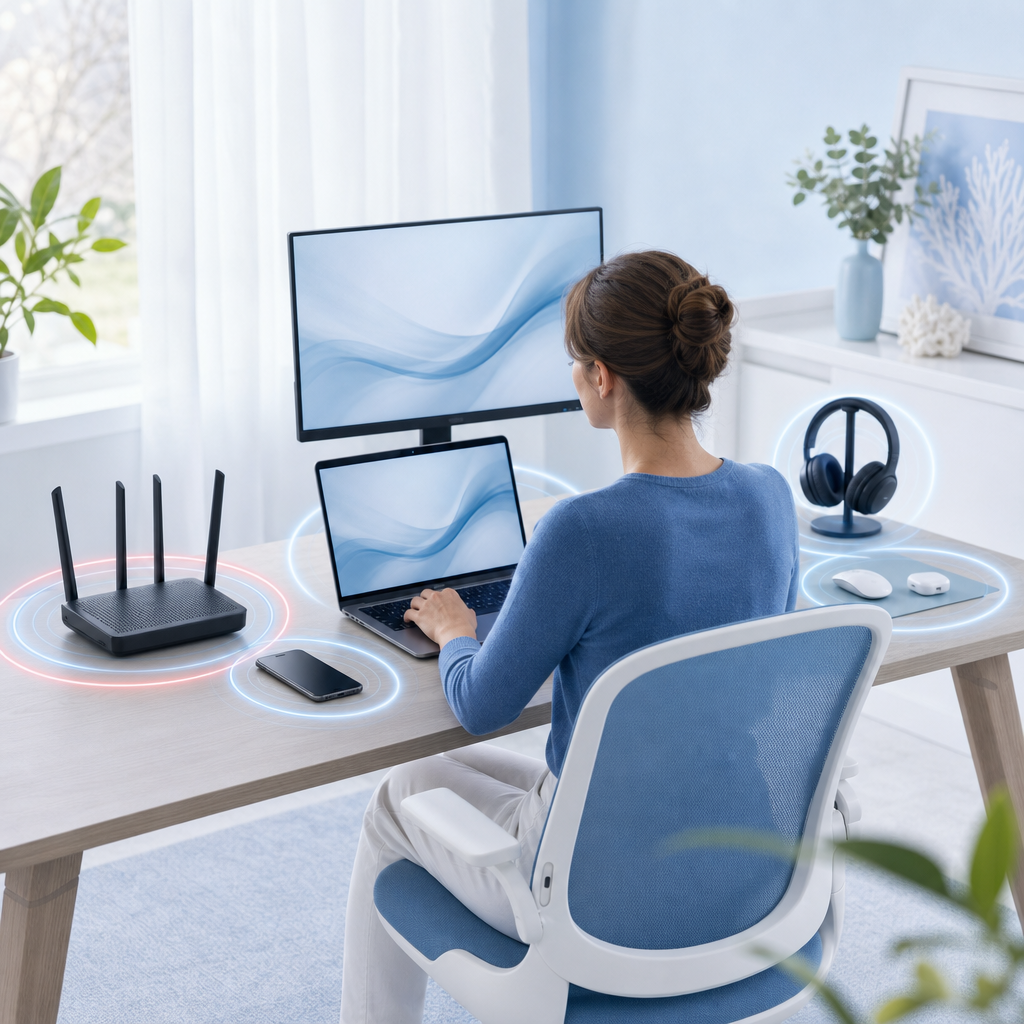
Concern persists because people experience exposure as a whole environment, while compliance information is usually presented through standards, equipment tests and technical limits. A person may simultaneously use a mobile, router, laptop, wireless accessories and smart appliances, making the lived question broader than whether one device passes its required test.
At EMF Neutralizer, we describe this as the invisible electromagnetic burden of modern life. Our position is precautionary: cumulative daily exposure deserves more attention than it receives in mainstream discussion.
This does not mean Australian standards simply ignore multiple frequencies. The ICNIRP guidelines include methods for assessing simultaneous exposures. However, regulatory compliance and personal environmental management remain different questions. A compliant device may still be used unnecessarily close to the body or left transmitting beside a bed when no connection is needed.
Four factors shape an individual's practical exposure pattern:
- Distance: Radiofrequency exposure generally falls as distance from a source increases, although the exact pattern depends on the source and surroundings.
- Duration: Brief use and continuous proximity are different exposure patterns.
- Power and connection conditions: A mobile may adjust its transmitted power according to its connection with the network.
- Source clustering: A desk can contain a laptop, mobile, monitor, wireless mouse, router and other powered equipment within a small area.
The mistake is framing the issue as a choice between panic and doing nothing. You can accept that Australian authorities have not established harm below the limits while still choosing to take control of your immediate environment.
Are headaches, fatigue and sleep problems caused by 5G?
Headaches, fatigue, poor concentration, tinnitus, dizziness and disturbed sleep cannot be attributed to 5G from symptoms alone. These complaints have many possible medical, environmental and behavioural causes. Anyone experiencing persistent or severe symptoms should seek qualified medical assessment before concluding that electromagnetic exposure is responsible. For commonly reported patterns, see our guide to EMF exposure symptoms in Australia.
Timing can still provide useful information. If symptoms appear after moving house, changing workstations or installing new equipment, record what changed. Include sleep, screen time, stress, caffeine, lighting, ventilation, mould, noise and device use. This is more reliable than selecting one explanation in advance.
A symptom diary should note:
- where the symptom occurred
- what equipment was operating nearby
- how close the equipment was
- how long the exposure lasted
- sleep quality and workload
- changes made and whether they were repeatable
Some people identify as experiencing electromagnetic hypersensitivity (EHS). Their symptoms and distress can be disabling, regardless of whether testing establishes radiofrequency exposure as the cause. Dismissing the person is not useful. Neither is promising that one product will diagnose or cure the problem.
We have supported a customer with severe allergies whose symptoms were particularly difficult around mobiles, laptops and mould. She had previously felt compelled to isolate herself from built-up areas. She reported substantial relief after applying a Neutralizer Disc to her phone and later wearing a Pillar EMF Energy Pendant. When the disc detached, she reported becoming unwell quickly. She subsequently felt able to travel through a city and complete an international flight.
That is a genuine customer experience, not a controlled clinical trial. It should be treated as an individual report rather than proof that the same result will occur for everyone.
How can you assess 5G and EMF exposure at home?
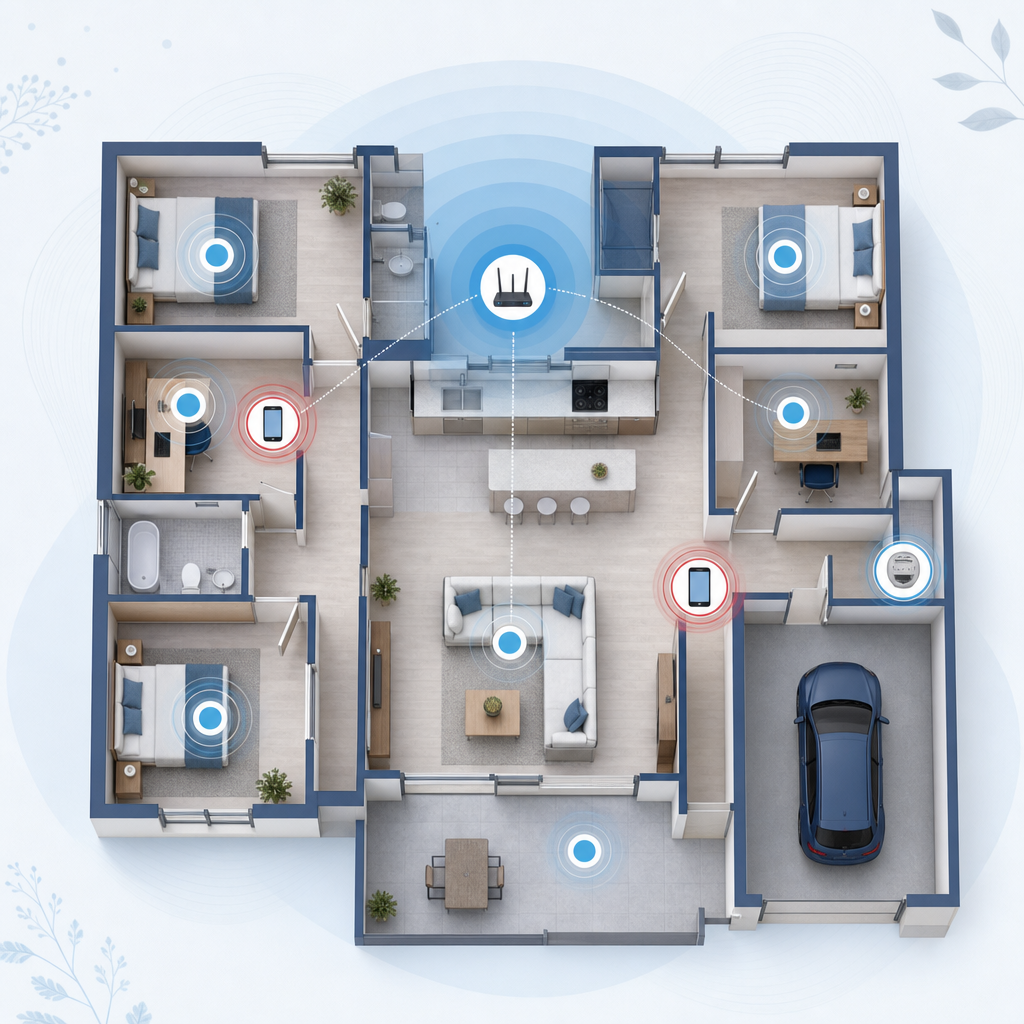
Start with an environmental inventory rather than buying equipment immediately. Identify wireless and electrical sources, where people spend extended periods, and which sources remain active unnecessarily. The highest-value changes are often simple adjustments to distance, placement and connection habits rather than attempting to eliminate every field. For a step-by-step approach, see our home EMF testing guide.
Begin with the places where your body remains relatively stationary: the bed, sofa, home office and children's study areas. List nearby routers, mobiles, tablets, smart speakers, cordless phone bases, wireless security equipment, smart meters and electrical appliances.
Next, separate radiofrequency sources from low-frequency electric and magnetic fields. They are different physical phenomena and require different measurement methods. A general-purpose meter may not measure every frequency accurately, and a reading without context can create more confusion than clarity.
If you use a consumer radiofrequency meter:
- read its frequency range and limitations
- measure the same location more than once
- compare devices under similar operating conditions
- avoid treating a brief peak as a medical diagnosis
- record where the meter was positioned
- remember that some transmissions are intermittent
Professional assessment may be appropriate where there is a nearby antenna installation, unusual electrical infrastructure or a complex source that cannot be identified. ACMA manages telecommunications regulation, while ARPANSA provides health and radiation guidance. A private measurement does not replace either regulator's compliance process.
How can Australians reduce unnecessary wireless exposure?
The most defensible exposure controls are straightforward: increase distance, shorten unnecessary connection time, reposition transmitting equipment and use wired connections where practical. These measures can reduce avoidable exposure without interfering with emergency access, work requirements or normal use of essential technology.
Practical steps include:
- Move routers out of bedrooms and away from beds, sofas and fixed work positions.
- Use a wired internet connection for stationary computers where suitable.
- Avoid sleeping with an active mobile directly beside your head.
- Use speakerphone for longer calls.
- Download large files before watching them where the service permits offline access.
- Do not carry an actively transmitting mobile against the body when a bag or nearby surface is available.
- Disable wireless functions that are not being used.
- Keep devices out of children's beds and sleeping areas.
- Improve mobile reception where possible, rather than making long calls in weak coverage areas.
Do not create a new safety problem while trying to reduce exposure. A mobile needed for emergency calls should remain accessible. Cables should not create trip hazards. Switching off a router may be impractical where medical, security or communication systems depend on it.
Physical shielding also requires care. Poorly planned shielding can interfere with reception and cause connected devices to alter their transmitting behaviour. It can also redirect fields rather than solving the original placement problem. Measurement before and after installation is more useful than assumptions.
How should you evaluate EMF neutralising products?
Evaluate an EMF product by asking what it claims to do, whether the test method matches that claim, and whether the seller distinguishes customer experience from clinical evidence. Avoid products marketed through guaranteed medical outcomes, fabricated technical language or fear-based claims that cannot be independently examined.
Neutralising and shielding are not interchangeable. Shielding aims to reduce or redirect a measurable field. A neutralising product may claim to alter the biological interaction or energetic quality of exposure without lowering the radiofrequency level displayed on a standard meter. A meter-only test may therefore be relevant to shielding but not sufficient to assess a different claimed mechanism.
That does not mean every neutralising claim is valid. It means the test must match the claim. Useful questions include:
- Is the proposed mechanism explained clearly?
- Is the product intended for one device, a person or a wider space?
- Are limitations stated?
- Are customer outcomes represented as reports rather than guaranteed results?
- Can the seller explain what the product will not do?
- Does the advertising comply with Australian consumer law?
The ACCC requires businesses to avoid false or misleading claims. Health-related marketing deserves particular care because vulnerable customers may delay appropriate medical treatment.
One customer independently arranged live blood analysis after purchasing an EMF pendant. Her recorded baseline showed freely moving cells. After standing near an operating microwave for four minutes, she and the practitioner observed more aggregation and slower movement. During another four-minute exposure while wearing the pendant, they described the cells as more free-moving and less clumped than during the unprotected exposure. The recorded test is available on our customer testimonials page.
This was an individual, customer-funded observation. It was not blinded, randomised or designed to establish a clinical outcome. We share it because transparent first-hand testing is more useful than vague testimonials, not because it settles the scientific question.
Where do Aulterra EMF protection products fit?
Aulterra products are designed for layered EMF neutralisation at personal, device, room and travel levels. Neutralizer Discs, pendants, whole-house USB and whole-car USB devices retune incoherent fields at the source rather than blocking signals.
The mechanism is field retuning, not shielding — see how Aulterra neutralisation works. The phone continues to function; the aim is to address the incoherent field component linked to oxidative stress in laboratory research, not to block communication.
Neutralizer Discs can be applied to commonly used devices such as phones, tablets, laptops and routers. A pendant or wristband provides a wearable option for people moving between multiple environments. Whole-house and whole-car USB neutralisers are intended for the broader mix of electronics encountered at home or during travel.
The practical approach is to map exposure by location:
- Personal layer: consider a pendant or wristband for changing environments.
- Device layer: apply discs to frequently used phones, laptops, routers and other devices.
- Room layer: consider Whole House USB for ambient home exposure; move routers out of bedrooms where practical.
- Travel layer: consider the whole-car USB neutraliser for regular driving.
At EMF Neutralizer, we describe this as layered EMF protection. Browse the EMF protection hub before choosing products.
Keep using speakerphone, sensible distance and wired connections where practical. Neutralisation and distance each address a different part of the setup; neither makes the other unnecessary.
When evaluating any EMF brand, ask what testing was performed and whether claims match a plausible mechanism. Documented Aulterra research, practitioner observations and consistent customer experience carry meaningful weight even where large randomised trials remain limited by research funding, not by absence of effect.
No EMF product should be presented as a guaranteed prevention or treatment for disease. The goal is informed control of cumulative daily exposure, not a false promise of zero EMF.
The missing metric is cumulative daily exposure
Our view is that the public conversation gives too much weight to isolated device compliance and too little attention to cumulative daily exposure. The practical unit of concern is not merely one router or one mobile. It is the person's complete pattern of proximity, duration, source clustering and recovery time.
This is where our position differs from the common advice that no precautions are needed if equipment complies with the relevant limits. Compliance matters. It is the legal and technical baseline. It is not a personalised plan for how to arrange your bedroom, workstation or device habits.
Consider a home office where a person spends the working day beside a laptop, external monitor, mobile and wireless peripherals. The first step should be reducing unnecessary proximity and transmissions. The next step may involve layered EMF protection for sources that cannot be removed.
At EMF Neutralizer, we favour layered EMF protection. Practical source control and thoughtful placement matter, but neutralising concentrated device clusters is often what makes cumulative daily exposure manageable in a real home or office. Some customers apply Neutralizer Discs to phones, laptops and routers; others add a pendant or wristband for changing environments or Whole House USB for broader residential coverage.
In one such high-device workspace, EMF products were applied to the concentrated device cluster after the user reported persistent headaches and poor concentration. Across the following four-week period, the user estimated that headache frequency fell by 70–90%, with better concentration and less early-afternoon mental fatigue. Individual results vary.
Our customer outcome descriptions include an estimated 60–85% improvement in perceived EMF-related fatigue after EMF products were applied across residential use cases. This is EMF Neutralizer's own qualitative customer experience data, not a controlled clinical finding.
No EMF product should be presented as a cure for cancer, allergies, sleep disorders or another medical condition. Persistent symptoms still require appropriate medical assessment.
The useful principle is to create a sequence:
- identify the concentrated sources
- remove unnecessary exposure
- increase practical distance
- address remaining sources
- track changes consistently
- keep medical assessment in the process
Your home should work with you, not against you. The goal is not a wireless-free life. It is an environment that uses technology deliberately and supports your biology.
When should you seek professional help?
Seek medical help when symptoms are severe, persistent, new or worsening, particularly when they include neurological changes, significant vertigo, chest symptoms or disrupted daily functioning. Seek technical help when you cannot identify a source, interpret measurements or safely modify electrical and telecommunications equipment.
A GP can investigate common and serious causes that an EMF meter cannot detect. Depending on the symptoms, this may include sleep disorders, migraine, hearing problems, medication effects, anxiety, vision strain, mould exposure or electrical noise. Do not stop prescribed treatment based on an assumed EMF cause.
For environmental questions, use an appropriately qualified electrician, building professional or measurement specialist. Do not open switchboards, alter smart meters or interfere with telecommunications infrastructure yourself.
If you want help selecting an EMF Neutralizer approach for a mobile, workspace or whole home, visit our contact page. Explain the devices involved, your room layout and where you spend the most time. This allows a more focused recommendation than buying products without an exposure plan.
References
The following sources provide the regulatory, public health and consumer protection foundations used in this article. They do not endorse EMF Neutralizer products or the customer experiences discussed above. Product outcomes are identified separately as reports from EMF Neutralizer's own customers and business records.
- Australian Radiation Protection and Nuclear Safety Agency, 5G and health.
- World Health Organization, Radiation: 5G mobile networks and health.
- International Commission on Non-Ionizing Radiation Protection, Guidelines for Limiting Exposure to Electromagnetic Fields (100 kHz to 300 GHz), 2020.
- Cancer Council Australia, I heard that the new 5G technology can cause cancer. Is this true?.
- Australian Competition and Consumer Commission, False or misleading claims.
Stay informed on EMF wellness
Get practical tips and product updates in your inbox.
Frequently asked questions
Does our "5g health concerns australia" guide explain what the evidence does and does not show?
Yes. This guide explains what ARPANSA and health authorities say about 5G, where uncertainty remains, practical exposure reduction, and how to evaluate neutralisation products without replacing medical care.
Is 5G dangerous to human health?
Australian authorities say there is no substantiated evidence that 5G exposure below the applicable safety limits causes adverse health effects. EMF Neutralizer nevertheless supports proportionate steps to reduce unnecessary cumulative exposure.
Can 5G cause cancer?
Cancer Council Australia and ARPANSA do not consider current evidence to establish that compliant 5G exposure causes cancer. Claims that 5G definitely causes cancer go beyond the available evidence.
Is 5G more dangerous than 4G?
ARPANSA does not regard 5G as inherently more dangerous than earlier mobile technologies when exposure remains below the safety limits. The underlying radiofrequency energy remains non-ionising.
Should I be worried about a 5G tower near my home?
Proximity alone does not determine personal exposure. Antenna direction, height, network demand, terrain and building materials can affect the result. Use official compliance information or competent measurement.
Can I reduce 5G exposure without giving up my mobile?
Yes. Increase distance during calls, avoid sleeping beside an active mobile, use wired connections where practical and disable unused wireless functions.
Do EMF neutralisers help with 5G exposure?
Aulterra neutralisers retune incoherent fields at the source so normal phone, laptop and router use does not require constant avoidance. They are designed for layered home and personal protection, not as medical treatments. Many customers neutralise main devices and continue usual habits; others add distance or wired connections as complementary steps.
Do EMF neutralisers replace medical care or exposure standards?
No. An EMF neutralising product does not diagnose illness, replace medical treatment or override Australian exposure regulation. It should form part of a broader environmental management plan.
Richard Kent
Science-backed EMF wellness education from the EMF Neutralizer team.
Related articles

Best EMF Protection Sticker for Your Phone in Australia: An Honest Review and Comparison
The best 'EMF protection sticker' for an Australian phone user is the Aulterra Neutralizer Discs 3-Pack — small adhesive discs applied one per device, starting…

Do EMF Pendants Actually Work? An Honest Answer for Australians
EMF pendants are not designed to block or shield electromagnetic fields the way a bed canopy, Faraday enclosure, or device pouch does. They are designed to harm…
Comparison page: pendant vs wristband vs disc for EMF protection
A pendant is the strongest all-purpose choice for personal EMF protection, while a wristband suits people who prefer a wearable away from the neck. A disc is di…