Understanding the Link Between EMF and Sleep Disruption in Australia

EMF may contribute to sleep disruption through direct exposure, device-related light, alerts and heightened physiological arousal, although evidence for a direct causal effect remains mixed. Australians can respond sensibly by removing unnecessary bedroom devices, increasing distance from active electronics and testing whether targeted environmental changes improve their sleep.
Electromagnetic fields are part of every modern Australian home. Mobile phones, Wi-Fi routers, smart meters, televisions, chargers and electrical wiring all contribute to an invisible electromagnetic burden. The practical question is not whether exposure exists. It is whether your bedroom environment supports restorative sleep.
This guide separates established sleep disruptors from emerging EMF concerns. It also provides a bedroom audit, practical exposure controls and a clear framework for assessing neutralising products without relying on fear or unsupported promises. For overnight bedroom setup, see our bedroom EMF guide and phone while sleeping guide. For broader context, start with the EMF protection hub.
Key Takeaways
- Treat EMF and sleep disruption as an environmental health question — start with established sleep hygiene, reduce avoidable exposure and observe your response rather than reacting from fear.
- Phones can disturb sleep through light, notifications, stimulating content and close overnight proximity.
- Direct radiofrequency effects on sleep are still debated, but phones, routers and overnight device use clearly disrupt sleep through light, alerts and proximity — and cumulative bedroom EMF load is the practical concern for most Australians.
- Distance, device removal and reduced overnight transmission are practical first steps.
- Compliance with exposure limits does not answer every question about comfort level, cumulative daily exposure or individual sensitivity.
- EMF neutralising products should complement good sleep habits — assess them through transparent claims, correct placement and consistent personal observation.
- Persistent insomnia, headaches, vertigo or fatigue require appropriate medical assessment.
Protect your family from EMF exposure
Browse our science-backed neutralizer products.
Shop EMF ProtectionSummary table
A useful bedroom strategy separates proven behavioural disruption from possible EMF-related effects. This prevents one device change from being credited for several simultaneous changes. It also makes your results easier to interpret, particularly when you compare sleep under consistent conditions rather than changing your entire routine at once.
- How it may affect sleep
- Can delay normal evening sleep signals and increase alertness
- Practical response
- Stop screen use before bed or use a separate alarm clock
- Evidence position
- Established sleep hygiene concern
- How it may affect sleep
- Interrupt sleep and maintain cognitive arousal
- Practical response
- Use do-not-disturb settings and keep the mobile outside the bedroom
- Evidence position
- Established behavioural concern
- How it may affect sleep
- Add radiofrequency exposure close to the body
- Practical response
- Increase distance, use flight mode where suitable and relocate routers
- Evidence position
- Exposure reduction is measurable, sleep benefit varies
- How it may affect sleep
- Produces electric or magnetic fields while operating
- Practical response
- Unplug unnecessary equipment and move chargers away from the bed
- Evidence position
- Exposure depends on the device and distance
- How it may affect sleep
- Intended to address the perceived biological burden without disabling devices
- Practical response
- Use according to product instructions and track personal outcomes
- Evidence position
- Customer-reported benefits do not establish clinical efficacy
What does the science say about EMF and sleep disruption?
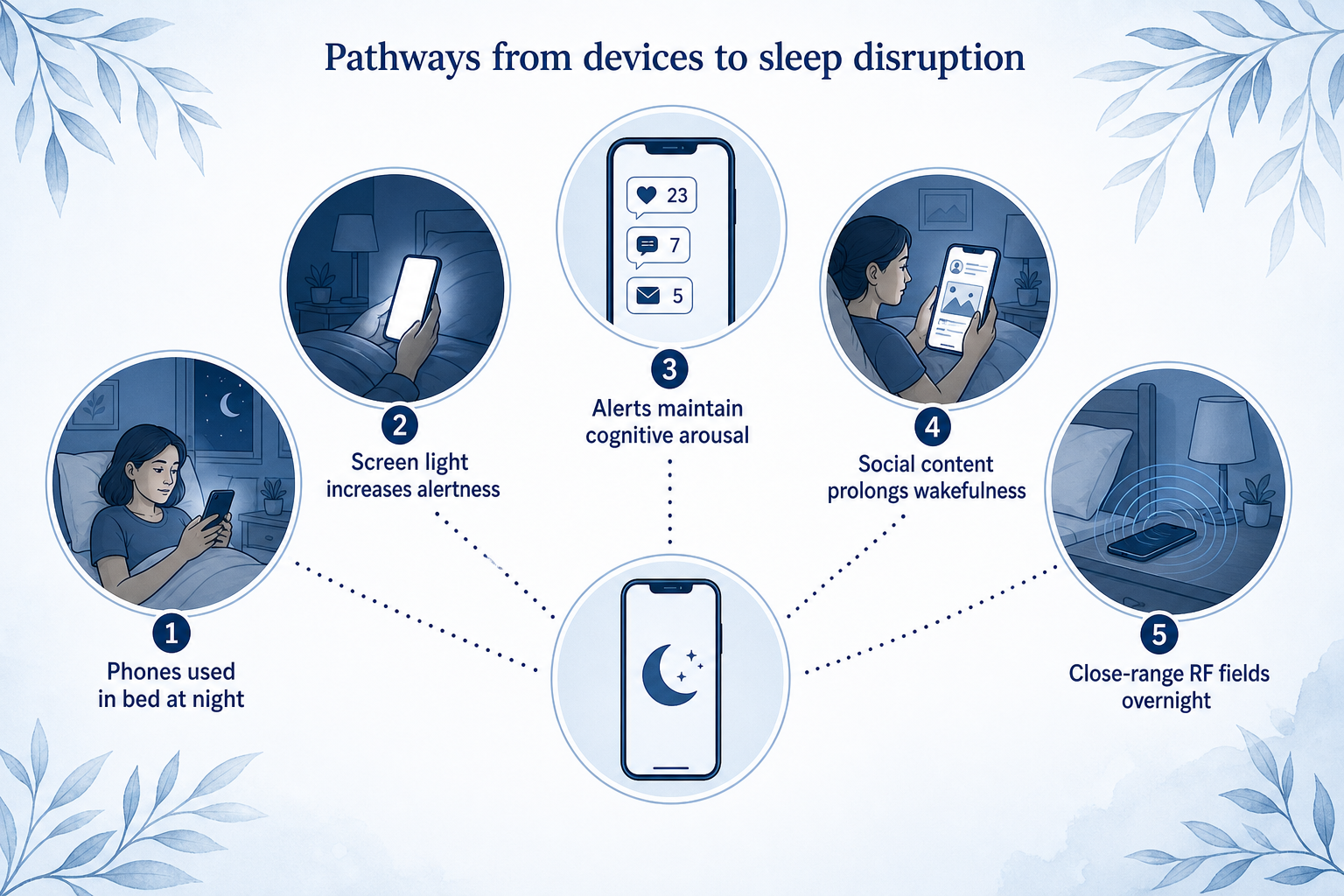
Research does not currently prove that everyday EMF exposure is a general cause of insomnia. Some experimental studies have reported changes in sleep-related measures, while others have found no meaningful effect. Differences in frequency, exposure strength, timing, study design and participant sensitivity make simple conclusions difficult.
EMF is a broad term. It includes extremely low-frequency fields associated with electricity and radiofrequency fields used by mobiles, Wi-Fi and Bluetooth. These are non-ionising fields. They do not carry enough energy to ionise atoms in the way X-rays can.
The Australian Radiation Protection and Nuclear Safety Agency (ARPANSA) states that there is no established scientific evidence that low-level radiofrequency exposure below relevant limits causes adverse health effects. ARPANSA also recognises that research continues. Its position is an important baseline, but it does not mean every report of poor sleep should be dismissed.
The International Commission on Non-Ionizing Radiation Protection publishes radiofrequency exposure guidelines designed to protect against established adverse health effects. These guidelines inform regulation and risk management. They are not personalised sleep standards for sleep quality, nor do they guarantee the same comfort level around every device.
Several pathways are often grouped under the phrase "EMF radiation and sleep", but they should be separated:
- Direct field exposure: The possibility that radiofrequency or low-frequency fields affect sleep physiology.
- Light exposure: Evening screen light can interfere with the body's preparation for sleep.
- Psychological stimulation: Messages, news, games and work maintain alertness.
- Sleep interruption: Sounds, vibration and illuminated screens can fragment sleep.
- Environmental concern: Worry about an exposure can itself increase arousal and make sleep harder.
That distinction matters. If you move your mobile out of the bedroom and sleep better, you may have reduced radiofrequency exposure, light, notifications and temptation to scroll at the same time. The result is valuable, but it does not prove which mechanism caused it.
A better approach is to treat the bedroom as a system. Remove obvious sleep disruptors first. Then make controlled EMF changes and observe whether the improvement continues.
How could electromagnetic fields interact with circadian rhythms?
Circadian rhythms are regulated by internal biological timing and environmental cues, especially light. Claims that EMF directly alters melatonin or circadian function remain scientifically contested. The clearer risk is indirect: connected devices keep people exposed to light, content, alerts and work when the brain should be winding down.
Melatonin helps signal biological night. Evening light, particularly bright or short-wavelength light, can delay that signal. A mobile beside the pillow also creates a behavioural loop. You check the time, notice a message and become mentally active again.
Healthdirect recommends regular sleep and wake times, a relaxing bedtime routine, and avoiding electronic devices before bed as part of sleep hygiene. These measures address known drivers of poor sleep regardless of your position on direct EMF effects.
There are also plausible questions about whether electromagnetic fields could influence biological processes through mechanisms other than heating. Research has examined nervous system activity, oxidative processes, brain electrical activity and hormone regulation. Plausibility, however, is not the same as demonstrated clinical harm. Results must be repeatable and relevant to realistic exposure conditions.
This is where online discussion often fails. One side treats any biological measurement as proof of disease. The other treats compliance with a limit as proof that no subtle effect could exist. Neither position deals well with uncertainty.
Our view is practical. Support your biology by reducing unnecessary overnight inputs. A bedroom does not need an active mobile beside your head, a router in or near the bedroom, multiple powered chargers and a television in standby. Removing those sources is inexpensive and does not require a definitive scientific verdict.
Which EMF sources commonly appear in Australian bedrooms?
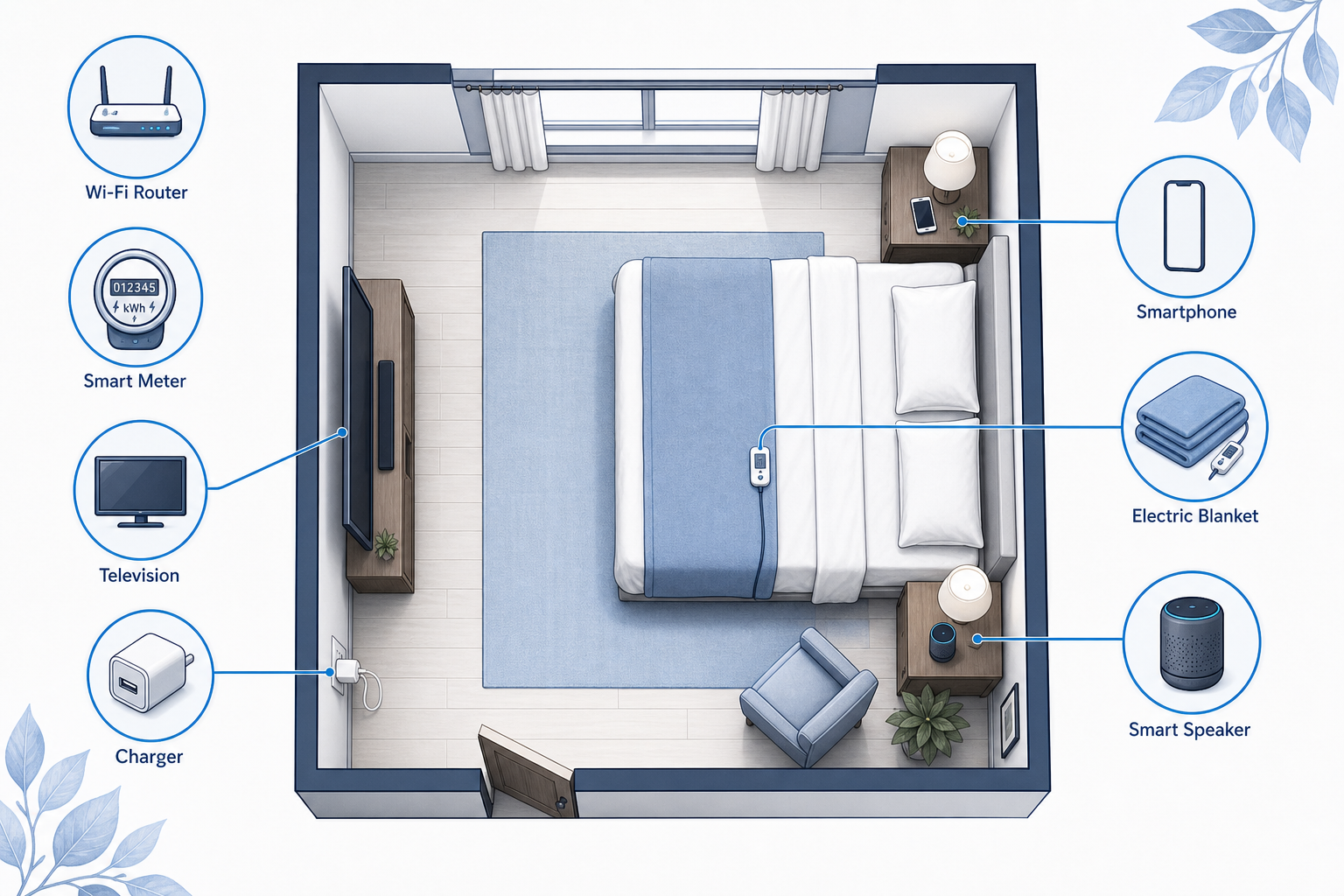
The most relevant bedroom sources are devices operating close to the bed or transmitting throughout the night. Common examples include mobiles, Wi-Fi equipment, baby monitors, smart speakers, televisions, chargers, electric blankets and wiring behind the bedhead. Proximity and operating mode matter more than appearance.
Begin with the bedside area. A mobile communicating with a network is different from one switched off. A charger can remain electrically active even when the mobile has been removed. A wireless router elsewhere in the home may contribute less at the pillow than a transmitting device on the bedside table.
Australian households may also have smart meters mounted on an external wall. If the bedroom sits directly behind that wall, note the position during your audit. Do not open, cover or interfere with metering equipment. Speak with the electricity provider or a qualified professional if you have concerns. Our bedroom EMF guide covers repositioning the bed and layered options where the meter sits on a shared wall.
Electric blankets deserve separate consideration. They operate very close to the body and may produce low-frequency electric and magnetic fields while powered. A practical option is to warm the bed, switch the blanket off and unplug it before sleep, provided this is suitable for the user and consistent with the manufacturer's safety instructions.
Baby monitors create a difficult trade-off because they serve a safety function. Do not remove necessary monitoring based on a general article. Instead, follow safe-sleep guidance, place the unit as far from the cot as its instructions permit and choose settings that meet your monitoring needs without unnecessary transmission. For nursery-specific guidance, see our EMF and children guide.
A bedroom audit should record:
- every powered or wireless device in the room
- its distance from the pillow
- whether it transmits continuously, intermittently or only when used
- whether it creates light, noise or heat
- whether it is necessary overnight
- what can be moved, switched off or replaced with a wired alternative
Consumer EMF meters can identify some field sources, but a reading is only meaningful if the meter covers the relevant frequency and is used correctly. A single number from an unsuitable meter can create false reassurance or unnecessary alarm. See our guide to testing EMF at home before relying on a consumer reading.
How can you reduce bedroom EMF exposure without disrupting daily life?
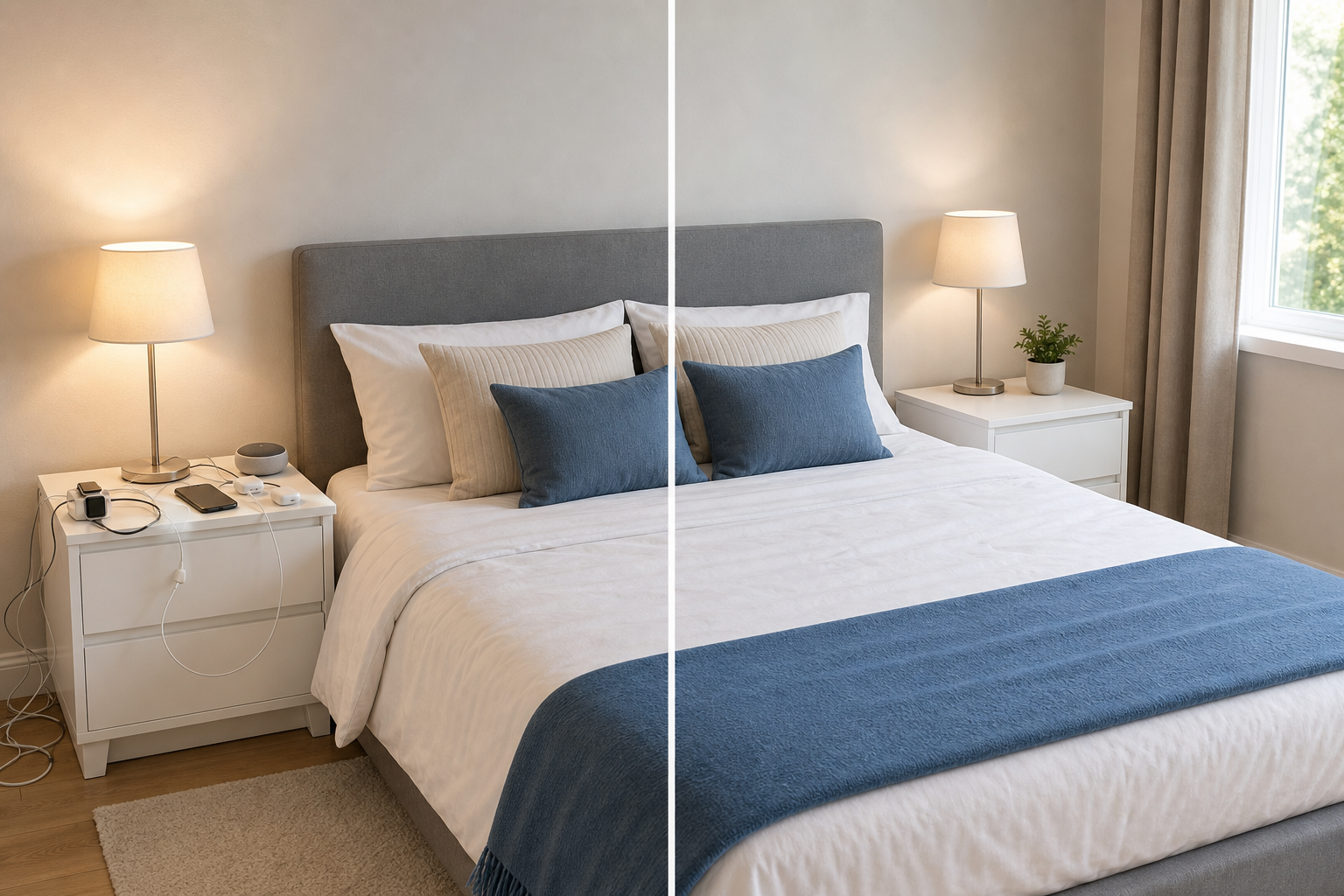
Reduce exposure by removing unnecessary devices, increasing distance and limiting overnight transmission. These controls are simple, reversible and measurable. They should be introduced alongside consistent sleep times, a dark room and reduced evening screen use so that EMF concerns do not distract from established sleep health priorities.
Move the mobile away from the bed
Use a separate battery-powered alarm clock and place the mobile outside the bedroom. If the mobile must remain nearby, activate flight mode after confirming that essential functions, alarms and emergency arrangements still work as intended.
Relocate Wi-Fi equipment
A router does not need to sit beside a bed. Move it to a central living area where it can provide useful coverage without being close to sleepers. Where practical, schedule Wi-Fi downtime overnight or switch it off manually. Consider the needs of security systems, medical devices and other connected equipment first.
Remove standby clutter
Unplug unused chargers, tablets, smart speakers and televisions. The goal is not to create a technologically empty home. It is to stop equipment operating beside your body when it provides no overnight benefit.
Increase distance
Field strength generally changes with distance from the source, although the exact pattern depends on the source and environment. Moving a device away is usually more reliable than placing an unverified barrier beside it.
Avoid improvised shielding. Conductive materials can alter signal behaviour and may cause a wireless device to increase power while searching for a connection. Shielding also requires competent assessment to prevent unintended exposure patterns or electrical safety problems.
Run a controlled sleep trial
Change one category at a time. Keep bedtime, caffeine use, alcohol, room temperature and exercise reasonably consistent. Record sleep onset, awakenings, morning alertness and daytime fatigue in plain language.
Do not turn the process into constant surveillance. Sleep trackers estimate sleep from movement and other signals. They are useful for trends but are not a substitute for clinical sleep testing. Excessive attention to nightly scores can itself increase sleep anxiety.
Can EMF neutralising products support better sleep?
EMF neutralising products may be used as an additional environmental measure when devices cannot be removed or disabled. At EMF Neutralizer, we position Neutralizer Discs, pendants, the Aulterra Whole House USB, and the EMF Energy Pillow as part of layered EMF protection. They are not substitutes for medical care, electrical safety or basic sleep hygiene.
Our preferred order is straightforward:
- Remove unnecessary bedroom sources.
- Increase distance from essential devices.
- Reduce avoidable transmission.
- Apply neutralising products where exposure remains.
- Observe sleep and daytime wellbeing consistently.
As explained on our How it works page, a Neutralizer Disc can be applied to a mobile or other device according to its product instructions. The Aulterra Whole House USB is intended for broader residential coverage through the home's electrical environment. In practice, Discs on priority devices together with a Whole House USB are often enough for customers who report improved sleep. Wearable products remain with the person across different environments. An EMF Energy Pillow is optional: it can add a sleep-focused layer at head height for overnight wellness, but it is not required for every bedroom setup.
These products retune incoherent electromagnetic fields toward a more coherent state rather than blocking the signal. That is different from conventional shielding claims. For the full mechanism, see how Aulterra technology works. Customers should understand that distinction before buying.
Our own business data includes an estimated 60–85% improvement in perceived EMF-related fatigue following product application. This estimate is derived from qualitative customer outcome descriptions across residential use cases. It is not a controlled clinical result and should not be interpreted as a guaranteed outcome. Individual results vary.
One customer contacted us after moving into a home where she experienced headaches, vertigo, fatigue, ringing ears and unsettled sleep. She was concerned about a transformer outside the bedroom and a persistent hum in a shared wall. We recommended an Aulterra Whole House USB and Neutralizer Discs. Her mother also purchased a Pillar EMF Energy Pendant for her.
The customer reported feeling refreshed after one night for the first time in weeks. That experience matters because it describes her outcome in her environment. It does not prove that EMF caused every symptom or that the same products will produce the same response for someone else.
This is the standard buyers should expect: clear product purpose, realistic limitations and no instruction to abandon medical assessment. If a seller promises to cure insomnia, allergies, depression or another condition, treat that promise with caution.
Why cumulative daily exposure deserves more attention
Our position differs from the usual single-device discussion. A compliant mobile, router or smart meter may each sit below applicable limits, yet modern life involves many sources operating around one person. We believe cumulative daily exposure is the more useful environmental question, particularly when sleep and fatigue are already poor.
Exposure standards are essential. They set protective limits around established effects and provide a common basis for compliance. But a compliance result is not a complete bedroom assessment. It does not tell you whether a router belongs beside your pillow, whether notifications fragment your sleep or whether you personally feel better after reducing overnight sources.
Consider an Australian working from home. Their day may involve a laptop, external monitor, wireless keyboard, mobile, earbuds and router. The evening adds streaming television and a tablet. The mobile then remains active beside the bed. Assessing only one device misses the lived environment. Our home office EMF guide covers daytime desk exposure that often carries into the bedroom at night.
We have seen this pattern in reports from people working long hours at desks surrounded by connected equipment. In our qualitative customer outcome descriptions, users in high-device environments reported an estimated 70–90% reduction in headache frequency after neutralising products were applied across their devices. This is our business data, not clinical trial evidence, and headache symptoms can have many causes. Individual results vary.
The useful insight is not that every symptom should be blamed on EMF. It is that environmental load should be assessed as a pattern. Your home should work with you, not against you.
This leads to a more disciplined method:
- map sources across the full day, not only the bedroom
- prioritise devices closest to the body
- distinguish essential exposure from avoidable exposure
- address behavioural stimulation and field exposure separately
- test changes without assuming the answer in advance
- seek medical advice when symptoms are persistent, severe or changing
This avoids both complacency and fear. You can take control of your immediate environment while acknowledging that the science around direct EMF and sleep effects remains unsettled.
What should your practical bedroom plan include?
A practical plan should combine sleep hygiene, source reduction and careful observation. Clear the bedside area first, move transmitting equipment away, establish a consistent wind-down routine and then assess any neutralising products separately. If sleep problems persist, involve a GP rather than repeatedly adding devices or environmental restrictions.
Start tonight by removing the mobile from arm's reach and unplugging unused bedside electronics. Check for routers, smart speakers, wearables and chargers. Make the room dark, quiet and comfortable. Keep the routine consistent long enough to notice a pattern rather than reacting to one unusual night.
If you choose an EMF Neutralizer product, match it to the exposure context. Neutralizer Discs suit individual electronics. Wearable products follow the user between locations. The Aulterra Whole House USB is intended for broader environments. An EMF Energy Pillow can be added around the bed after obvious sources have been addressed.
The objective is not to fear technology. It is to neutralise your environment deliberately and support your biology while retaining the tools modern life requires.
Which sources inform this guide?
These references provide Australian public health guidance, international exposure standards and practical sleep advice. They do not endorse EMF Neutralizer products. They are included so readers can distinguish established regulatory positions from our environmental approach, customer-reported outcomes and belief that cumulative exposure deserves closer practical attention.
- ARPANSA, Radiation Protection Standard for Maximum Exposure Levels to Radiofrequency Fields (RPS S-1) — Australian regulatory context for non-ionising EMF exposure limits and health guidance.
- International Commission on Non-Ionizing Radiation Protection, Radiofrequency guidelines.
- World Health Organization, Radiation: Electromagnetic fields.
- Healthdirect Australia, Sleep — stages, tips and disorders.
Stay informed on EMF wellness
Get practical tips and product updates in your inbox.
Frequently asked questions
Can sleeping beside a mobile phone disrupt sleep?
Yes. Sleeping beside a mobile phone disrupts sleep through notifications, screen light, stimulating content and close proximity. Direct radiofrequency effects on sleep physiology remain debated, but moving the phone away from the bed or using flight mode where appropriate addresses the clearest overnight disruptors while preserving necessary emergency access.
Should I turn off Wi-Fi at night?
Turning off Wi-Fi reduces an avoidable source of overnight radiofrequency exposure and may discourage late-night device use. Check whether security, monitoring or medical equipment depends on the network first. Relocating the router away from bedrooms is another practical option.
Are EMF exposure limits designed to protect sleep?
Exposure limits protect against established adverse health effects associated with radiofrequency exposure. They are not personalised standards for ideal sleep quality, nor do they guarantee the same comfort level near every compliant device. A compliant device can still disturb sleep through light, sound, content or close placement.
Do EMF neutralizer discs block radiation?
As explained on our How it works page, neutralizer discs do not block electromagnetic fields. Instead, they use a paramagnetic mineral compound to retune incoherent fields toward a more coherent state, reducing disruptive biological interaction rather than blocking the signal.
Does our "emf and sleep disruption" guide explain how to tell whether EMF is affecting your sleep?
Yes. You cannot determine the cause from symptoms alone, but this guide recommends auditing your bedroom, changing one factor at a time and recording consistent observations. Consult a GP if sleep problems persist, worsen or affect daytime safety and functioning.
Can EMF products cure insomnia or fatigue?
No EMF product should be treated as a cure for insomnia, fatigue or another medical condition. Some customers report benefits, but individual reports do not establish clinical efficacy. Persistent symptoms deserve appropriate medical assessment.

Richard Kent
Science-backed EMF wellness education from the EMF Neutralizer team.
Related articles
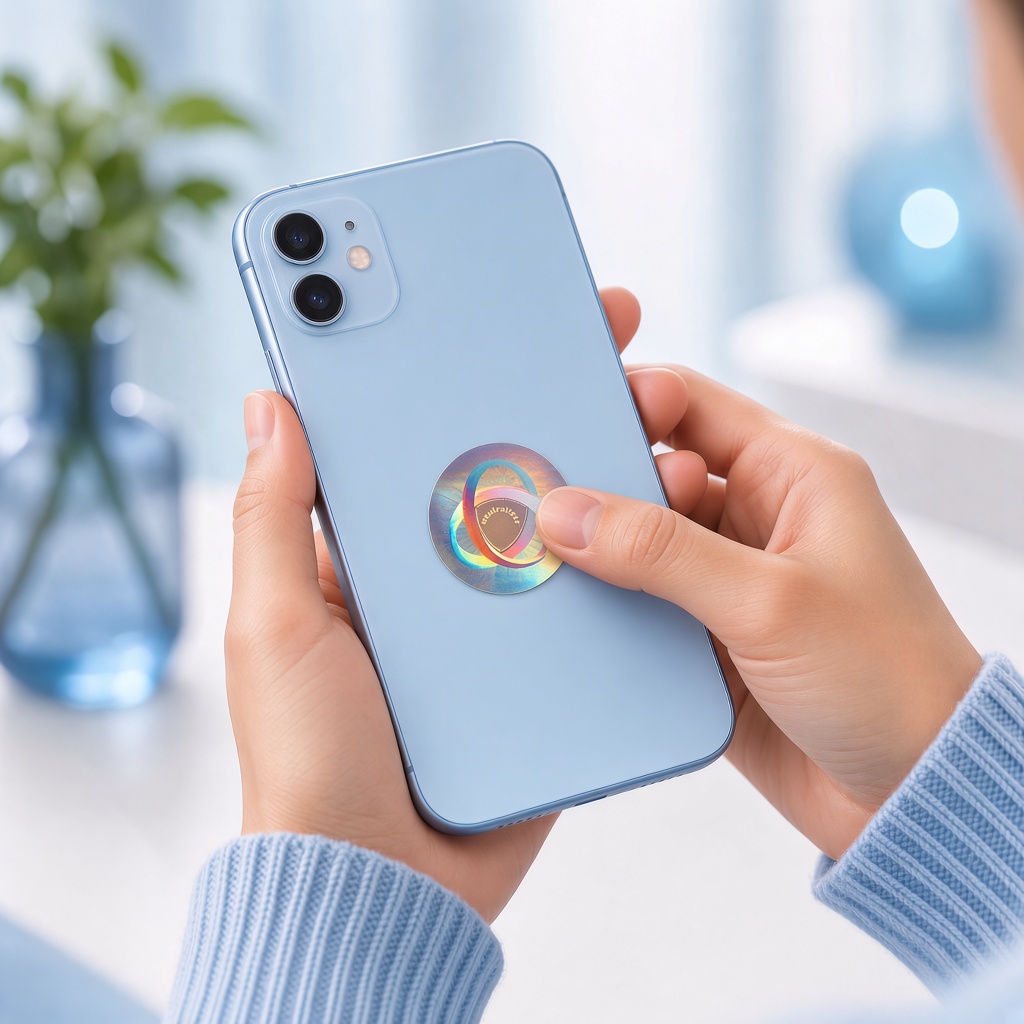
Best EMF Protection Sticker for Your Phone in Australia: An Honest Review and Comparison
The best 'EMF protection sticker' for an Australian phone user is the Aulterra Neutralizer Discs 3-Pack — small adhesive discs applied one per device, starting…

Do EMF Pendants Actually Work? An Honest Answer for Australians
EMF pendants are not designed to block or shield electromagnetic fields the way a bed canopy, Faraday enclosure, or device pouch does. They are designed to harm…

EMF pendant for kids Australia: a parent's guide to everyday protection
An EMF pendant for kids is wearable jewellery containing Aulterra's mineral matrix, designed to neutralise disruptive field interaction from school iPads, home…